As grid operators continue to integrate renewable generation, containerized architectures are becoming a practical option for utility scale battery storage deployment. At HiTHIUM, we have observed that container-based designs help simplify installation, transportation, and on-site coordination for large projects. Rather than focusing on customization for each location, containerized systems allow utilities to work with standardized layouts while still meeting project-specific requirements. This approach has made utility scale energy storage systems easier to plan within constrained schedules and evolving grid frameworks, especially where rapid commissioning and predictable construction timelines are required.
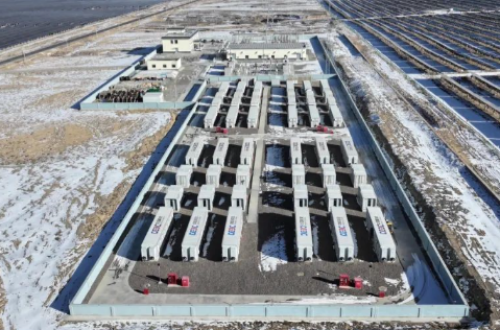
From a system perspective, containerized solutions influence how utility scale battery storage is engineered and maintained over its lifecycle. Pre-integrated containers combine battery racks, thermal management, and safety components in a controlled manufacturing environment. This reduces on-site variability and supports consistent system performance once deployed. In utility scale energy storage systems, such consistency plays a role in maintaining stable operation under different load conditions. Our engineering teams focus on balancing layout density with accessibility, ensuring that maintenance activities can be carried out without disrupting overall system availability or grid services.
Containerized design also supports the functional requirements of utility scale battery storage projects. Modular containers can be scaled horizontally to match capacity targets, which aligns well with long-term grid expansion planning. Within utility scale energy storage systems, this flexibility allows operators to add capacity or reconfigure layouts as grid demand changes. Our utility-scale solutions are designed to support energy shifting, peak shaving, load balancing, and frequency regulation, providing steady operational support for modern power networks. These capabilities are integrated with control strategies that prioritize reliability rather than short-term performance gains.
For large-scale projects, adaptability remains a key consideration. At HiTHIUM, we design containerized systems to remain flexible for utility applications without introducing unnecessary complexity. By aligning container dimensions, interfaces, and operational parameters with common infrastructure standards, utility scale battery storage installations can be adapted to different grid environments. Within utility scale energy storage systems, this flexibility helps utilities manage evolving regulatory requirements and operational strategies while maintaining consistent system behavior over time.
The impact of containerized design on utility scale battery storage is closely tied to predictability, scalability, and operational clarity. For utility scale energy storage systems, containerization provides a structured way to deploy large capacities while maintaining manageable installation and maintenance processes. At HiTHIUM, we view containerized solutions as a practical response to real grid needs, supporting stable performance and long-term system planning without overcomplicating project execution.



 Previous: