As global power systems evolve, thermal management has become a central consideration in utility scale battery storage projects. In large-capacity battery installations, heat dissipation directly affects safety, system stability, and long-term operational consistency. From our perspective at HiTHIUM, cooling design is not a peripheral detail but an integral part of how a battery energy storage system performs across its lifecycle. By examining liquid cooling and air cooling within utility applications, we aim to clarify how different approaches align with real-world operating requirements rather than theoretical performance claims.
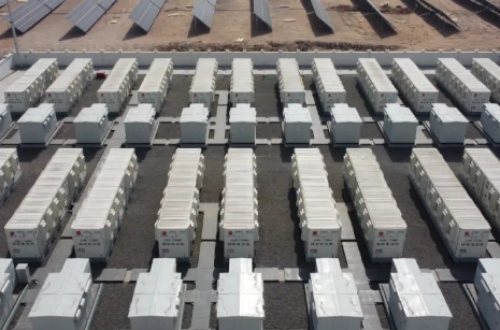
Air cooling has traditionally been used in early utility scale battery storage systems due to its relatively simple structure and familiar maintenance logic. In this approach, ambient or conditioned air circulates through battery enclosures to remove heat generated during charge and discharge. For certain moderate-density installations, air cooling can provide acceptable temperature control when environmental conditions remain stable. However, as system capacities increase, air-based solutions often face challenges in achieving uniform thermal distribution across densely packed cells. Temperature gradients may develop between battery racks, which can influence cell aging behavior and complicate long-term operational planning for large utility sites.
Liquid cooling addresses many of the limitations observed in air-based designs within utility scale battery storage environments. By circulating coolant through dedicated thermal pathways, heat can be extracted more evenly from battery cells, supporting tighter temperature control across the entire system. In high-energy-density utility scale battery storage systems, this uniformity contributes to predictable performance under varying load profiles. From a system integration standpoint, liquid cooling also allows for more compact layouts, which can be relevant for space-constrained utility installations. These characteristics make liquid cooling increasingly relevant as project scale and operational expectations continue to expand.
Thermal management choices do not exist in isolation. Our approach to HiTHIUM BESS development reflects a comprehensive industry chain map that spans material development, battery production, system integration, and battery recycling. Cooling architecture is evaluated alongside cell chemistry, structural design, and end-of-life considerations to support a complete lifecycle value chain for energy storage. By aligning thermal strategies with forward-looking R&D across the industry chain, we ensure that cooling decisions support long-term system reliability rather than short-term configuration convenience.
The comparison between liquid cooling and air cooling highlights that no single solution fits every scenario within utility scale battery storage systems. Air cooling remains suitable for certain deployment conditions, while liquid cooling offers advantages in thermal consistency and system scalability. By grounding cooling design in lifecycle thinking and integrated industry chain capabilities, we focus on aligning thermal solutions with the practical demands of modern utility-scale energy storage rather than emphasizing isolated technical features.




 Previous: