Embrace Change
Explore Essence
Innovation Technology Map
Innovation Technology Map Innovation Technology Map
Long<BR>Lifespan
Long
Lifespan
High<BR>Safety
High
Safety
High<BR>Consistency
High
Consistency
Cost<br>-effective
Cost
-effective
SEI Membrane Targeted
Repair Electrolyte
Designed to extend cycle life and enhance safety, our targeted repair electrolyte can identify micro-damage on the electrode SEI layer and precisely restore it in situ. By minimizing unnecessary electrolyte and active lithium consumption during SEI repair, this technology significantly improves long-term cycling stability while maintaining the highest safety standards.
Highly Stable Anode Interface
A highly isotropic graphite structure reduces mechanical stress on the SEI film caused by lithium expansion during cycling. This stabilizes the anode interface, suppresses irreversible lithium loss and side reactions, and represents a key lithium-ion battery innovation, enabling HiTHIUM cells to achieve an ultra-long cycle life.
Active Lithium Slow Release
Through optimized cathode material design, selected cathode particles are engineered to gradually release lithium ions over time. This controlled lithium compensation precisely matches long-term lithium consumption, ensuring sustained lithium availability and extended cycle life.
Safer Active Materials
Engineered for enhanced safety and long-term stability, our cathode materials utilize multi-element doping technology to improve electrochemical kinetics and structural integrity in large-format cells. This approach significantly enhances cycle life, reduces impedance growth, and improves overall safety performance. For anode materials, graphite with optimized surface characteristics is applied to improve thermal efficiency and further strengthen cell safety.
Three-Dimensional Air Channels
We use 3D channels to achieve a smooth and unrestricted gas flow pathway within the cell. Combining this with improved vent technology allows cell pressure buildups to quickly be controlled.
Three-Dimensional Air Channels
To ensure effective pressure and gas management, three-dimensional air channels are integrated to create smooth and unobstructed internal gas flow pathways. Combined with advanced venting technology, this design enables rapid pressure release, effectively preventing pressure buildup and enhancing overall cell safety.
High Capacity Consistency
Designed to ensure system-level reliability, the ∞Cell 1175Ah is the world’s first kAh-level ESS cell, delivering ultra-high capacity while maintaining exceptional engineering consistency. Through optimized cell design and manufacturing control, cell-to-cell OCV variation is reduced to below 3%, significantly enhancing integrated system performance and reflecting our advanced lithium-ion battery technology capabilities.
Lower Self-discharge
To maintain long-term consistency across large-format cells, a full-tab electrode stacking process is applied to fundamentally reduce the generation of potential particles that may cause internal shorts and self-discharge. In addition, high-capacity cell architecture enables a more uniform internal pressure distribution, improving safety and ensuring consistent performance throughout the battery lifecycle.
Improved Electrode Interface Performance
By integrating full-tab electrode stacking, specialized separator coatings, and vacuum-assisted fixture formation, uneven mechanical stress associated with traditional electrode winding is effectively eliminated. This significantly improves SEI interface stability, ensuring superior long-term cycling consistency across cells and reinforcing the robustness of our lithium-ion battery technology at scale.
World’s First 1000+Ah
Energy Storage Battery and System
Engineered for system-level cost optimization, the ∞Cell 1175Ah is the world’s first 1000+Ah energy storage battery and system solution. Compared to conventional 314Ah cells, the cost per Wh is reduced by 7.5%, while balance-of-system (non-cell) costs are lowered by up to 30%. This system-wide cost advantage is a direct result of HiTHIUM energy storage technology designed for large-format, high-efficiency ESS applications.
Smart Manufacturing Production Line
HiTHIUM’s fourth-generation high-efficiency lithium battery smart manufacturing production line integrates new technologies, including MES, 5G, and artificial intelligence. Compared to the third generation, production efficiency has increased by 30%, automation levels by 26%, and manufacturing costs have been reduced by 25%. This vertically integrated manufacturing capability strengthens product consistency, scalability, and cost competitiveness, demonstrating the maturity of our lithium battery technology at an industrial scale.
Low Ecological Impact
HiTHIUM has established a comprehensive ecological framework covering the entire value chain—from R&D and manufacturing to battery recycling. By optimizing resource utilization and extending the lifecycle value of batteries, this closed-loop approach reduces environmental impact while lowering the long-term cost of energy storage for our customers.
HiTHIUM is driven by innovation, focusing on cutting-edge technologies in materials, batteries, systems, processes, and controls.
With four dedicated research institutes, over 1,000 R&D experts, and more than 4,300 global patents,
HiTHIUM turns advanced technology into practical, scalable solutions.
All HiTHIUM technologies are thoroughly tested by internationally accredited laboratories such as
TÜV Rheinland and CNAS, and supported by ISO-certified management systems.
This allows us to deliver safe, reliable, and proven energy storage solutions for real-world applications.
Quality Policy
Quality
Quality
ISO9001
ISO17025
GBT27922
CTEAS1001
Environment
Environment
ISO14001
ISO14064
ISO14067
ISO50001
PAS2060
Occupational<BR>Health
Occupational
Health
ISO45001
Other
Other
SA8000
ISO27001
GBT29490
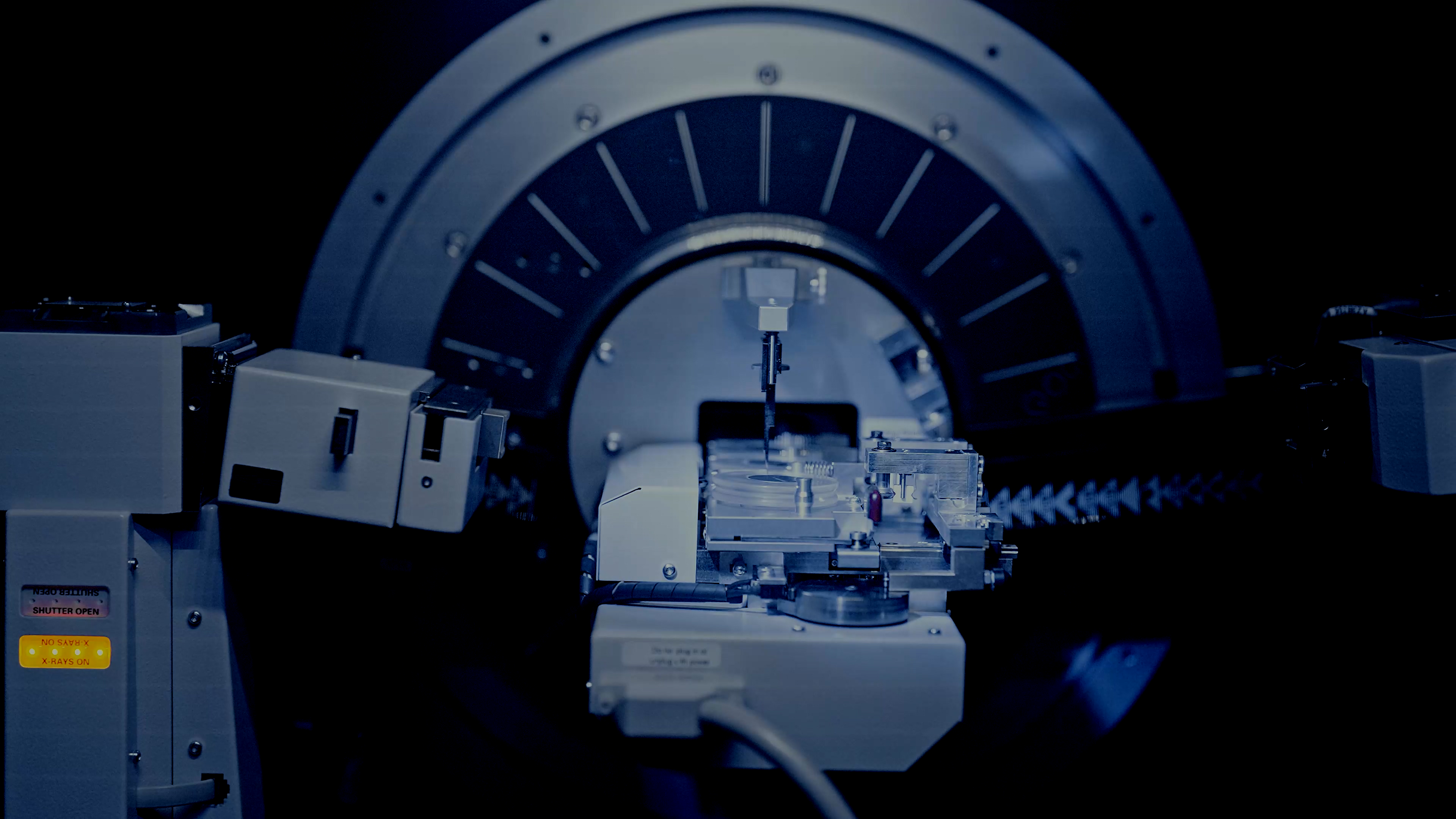
Test & Validation Center
Analysis & Evaluation——Component
Software
Electronic Component
Single Board
Battery
Complete Machine/PACK
EMS
Function
Performance
Security
Compatibility
Interface testing
BMS
Single test of electronic components Performance
Function
Reliability
White-box testing
FA
Battery OCV, HPPC, etc
Algorithm testing
PACK function
PACK performance
PACK Reliability
EMC
PCS
AGC variable load
Grid-connected performance
Application scenarios
Frequency modulation
Power grid adaptability
Analysis & Evaluation——Systems
EMS\BMS\PCS Tests Covered
Simulation
Cluster
3S Joint Test
ESS
Data simulation
HIL
Cluster level system testing
Power storage cluster level test
Protocol debugging
Feature joint test
Home storage system test
Mobile energy storage system test
Industrial and commercial system test
Container system test
Build outdoors system
Accreditation
CNAS accreditation
TÜV Rheinland
OK
Subscription Success
Congratulations on your successful subscription to HTHlUM news
Got it