Long-Duration Energy Storage (LDES) is rapidly gaining attention as grids integrate more renewable energy and industries demand continuous power. LDES systems enable reliable energy delivery over extended periods, making them essential for modern grid stability, renewable integration, and high-demand industrial applications.
This article covers projected market growth, key drivers, challenges, effective solution features, and highlights HiTHIUM ∞Power8 6.9 MW / 55.2 MWh as a recommended LDES system.
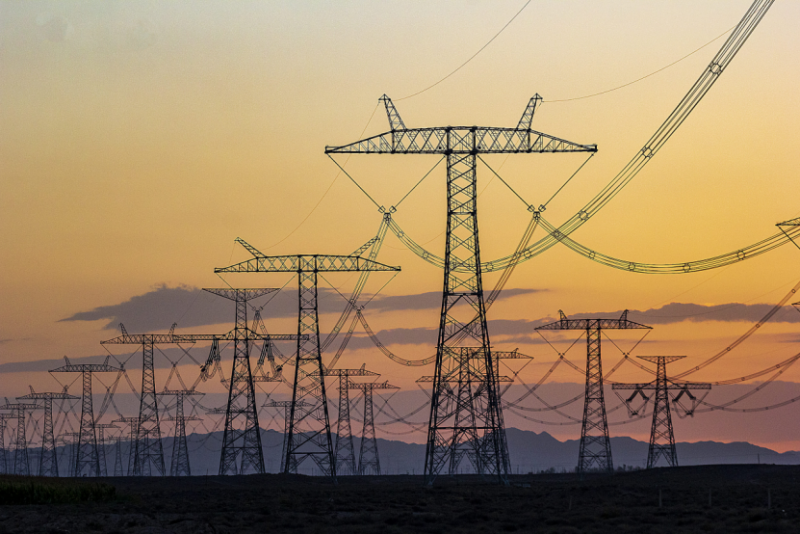
Long-duration energy storage (LDES) refers to energy storage systems designed to deliver electricity over extended periods, typically exceeding 4 hours. In many grid-scale applications, 8-hour systems are increasingly considered a practical benchmark because they can support full-cycle energy shifting between day and night.
This definition is important because traditional energy storage systems, often designed for 1-2 hours, focus on short-term balancing. They provide fast response but cannot sustain energy delivery over long periods. As a result, they are not sufficient for applications that require continuous supply or large-scale renewable integration.
LDES systems, by contrast, focus on energy capacity rather than short bursts of power. This makes them suitable for grid stabilization, renewable energy shifting, and long-duration backup applications.
The global long-duration energy storage (LDES) market is projected to grow at a compound annual growth rate (CAGR) of approximately 13% to 14% over the next decade. Several market research reports provide specific projections that support this estimate.
According to BloombergNEF's latest forecast, global long-duration energy storage new installations reached 2.0 GW/9.6 GWh in 2025, with a project pipeline of 97 GW/422 GWh. New additions are expected to grow to 8.1 GW/35.4 GWh in 2026, signaling rapid market expansion.[1].

This growth rate reflects a transition from early-stage adoption to large-scale deployment. While the market is still developing compared to short-duration storage, investment and project pipelines are increasing rapidly.
The long-duration energy storage (LDES) market is expanding rapidly because modern power systems require longer, more flexible energy balancing capabilities. This growth is driven by structural shifts in both energy supply and demand.
LDES adoption is accelerating because solar and wind generation are intermittent. Therefore, storing excess energy for hours or even days ensures electricity is available when renewable output is low.
This capability helps utilities balance daily and seasonal variations in generation, reducing reliance on fossil-fuel backup and improving overall grid reliability.
Industries with continuous power needs, such as grid-scale applications including renewable energy integration, capacity firming, and peak shaving , drive LDES demand. Short-duration storage cannot guarantee 24/7 operation, making long-duration energy storage necessary.
Consequently, LDES provides these sectors with predictable energy delivery, minimizing downtime and supporting high-load industrial processes.
LDES supports grid stability by providing peak shaving, frequency regulation, and backup power. As distributed generation and fluctuating loads make modern grids more complex, these systems help maintain consistent voltage and frequency.
Government policies increasingly favor energy storage as essential infrastructure. In addition to subsidies, LDES creates value through energy arbitrage, capacity markets, and ancillary services. As a result, utilities and private operators can monetize storage capabilities, encouraging wider adoption and long-term investment.
The cost-effectiveness of LDES is improving due to better battery design and system integration. Moreover, large-capacity cells and optimized architectures reduce component count and energy losses.
Together, these advancements make long-duration energy storage economically viable, supporting both utility-scale projects and industrial energy management.
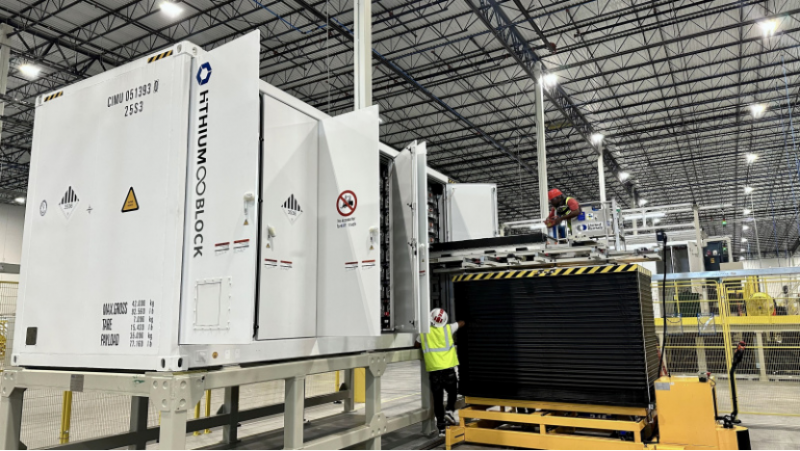
Despite strong growth potential, the LDES market still faces several structural challenges that limit large-scale deployment. These challenges mainly relate to technology maturity, economics, and system integration.
First, technology limitations restrict large-scale deployment. Many current storage systems are adapted from short-duration designs of 1-2 hours. When extended to 6-8 hours, they often exhibit inefficiencies, higher costs, and increased complexity, emphasizing the need for purpose-built long-duration solutions.
Second, high upfront costs and uncertain returns slow market adoption. LDES projects require significant capital investment, while revenue models for long-duration services, such as energy arbitrage or capacity markets, are still evolving. This makes achieving predictable financial returns challenging in many regions.
Third, safety and reliability remain critical concerns. As storage duration and capacity increase, thermal management, fire protection, and long-term degradation become more complex. Proper design and monitoring are essential to ensure safe operation over decades.
Fourth, operational efficiency poses challenges. Extended charge-discharge cycles can lead to higher cumulative energy losses, particularly in auxiliary systems and thermal management. Improving round-trip efficiency and reducing parasitic energy consumption are key to maintaining overall system performance.
Fifth, supply chain and ecosystem coordination can limit deployment speed. Effective LDES implementation requires alignment across battery manufacturing, system integration, grid infrastructure, and end-use applications. Gaps or inefficiencies in any segment can increase costs and delay projects.
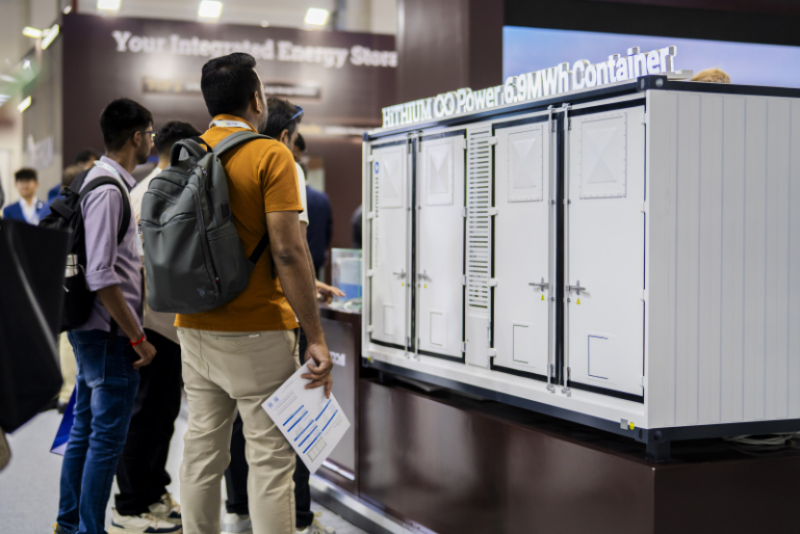
An effective long-duration energy storage (LDES) solution must deliver reliable performance over extended periods while maintaining cost efficiency and system safety. As deployment scales across grids and high-demand applications, solutions must be purpose-built rather than adapted from short-duration designs.
An LDES system must be designed for a specific discharge duration, typically 6-8 hours or longer. This is important because extending short-duration systems by adding more battery units increases system complexity and energy losses.
In contrast, a native architecture aligns battery capacity, power output, and control systems, resulting in more stable operation and lower system-level inefficiency.
Effective LDES performance starts with battery cells that can handle long-term use. Look for cells that support deep and repeated charge-discharge cycles over extended periods—this capability is the foundation of long-duration operation.
High‑capacity cells offer an additional advantage: they reduce the number of parallel connections required in the system. Fewer parallel connections simplify system design and lower electrical and thermal management complexity.
Efficiency must be maintained throughout the entire discharge cycle, not only at peak output. This includes round-trip efficiency and energy consumed by cooling and control systems. By optimizing thermal management and power control, cumulative energy losses over long cycles are minimized, ensuring consistent performance.
As total stored energy increases, safety must be addressed at both the cell and system levels. This includes thermal control, pressure management, and prevention of failure propagation between cells. These mechanisms must ensure that the system remains stable under both normal operation and extreme conditions.
Minimizing LCOS is crucial for economic viability. By improving efficiency, extending battery life, and eliminating unnecessary components, the cost per unit of energy delivered over the system’s lifetime decreases. This approach ensures that long-duration storage remains financially sustainable while providing reliable energy output.
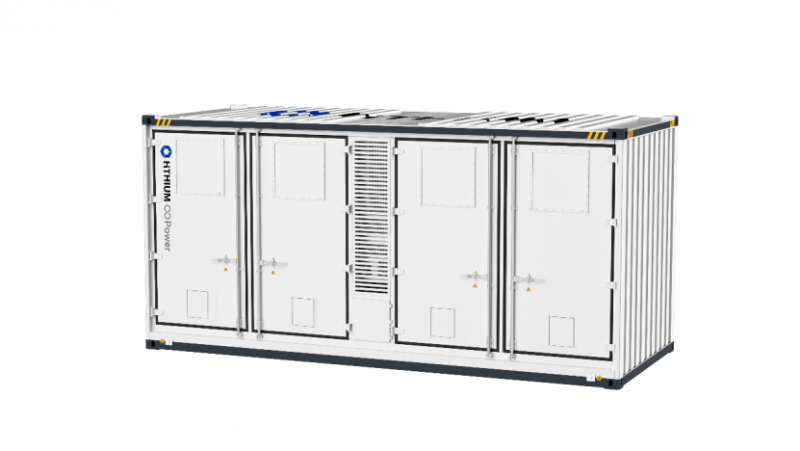
The ∞Power8 6.9 MW / 55.2 MWhis engineered for 8‑hour continuous operation, supporting renewable power delivery under varying conditions. Each unit delivers 6.9 MW of power and 55.2 MWh of energy, suitable for utility‑scale storage and hybrid wind‑solar installations.
Each unit integrates one medium‑voltage module and eight energy storage modules, simplifying deployment. Optimized hoisting and cabling reduce construction intensity by 18 % and land use by 23 % compared with previous designs.
At the core of ∞Power8 6.9 MW / 55.2 MWh are dedicated ∞Cell 1300Ah battery cells, each providing over four times the capacity of mainstream cells. This high capacity reduces the total number of system components by approximately 30%, simplifying integration and improving overall system reliability.
By enabling longer continuous operation with fewer parts, the ∞Cell 1300Ah supports efficient, resilient, and scalable long-duration energy storage for AI data centers.
The ∞Power8 6.9 MW / 55.2 MWh maintains consistent efficiency over its entire 8‑hour discharge cycle. This is achieved through three key mechanisms: intelligent control, thermal‑island simulation, and end‑to‑end active balancing.
Together, these features reduce auxiliary power consumption by over 30%, improve temperature-control precision by 50%, and increase response speed by 20%, helping minimize energy loss throughout long-duration operation.
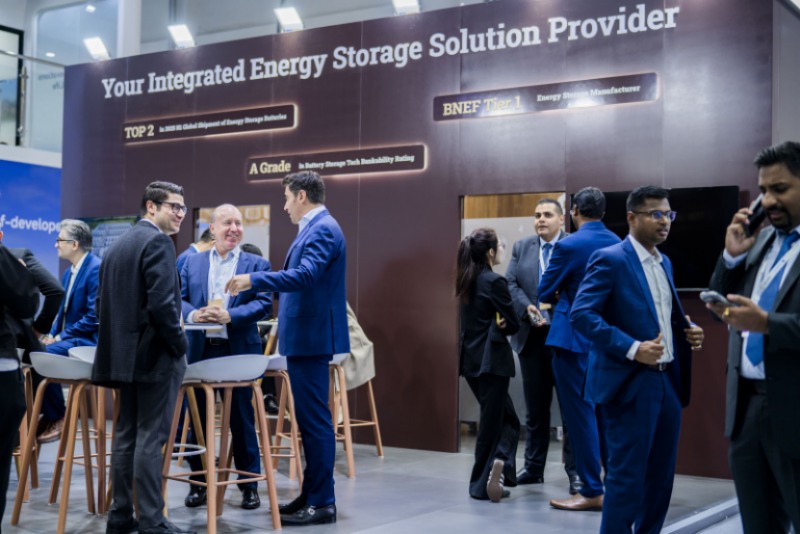
The global LDES market is poised for strong growth, driven by renewable integration, industrial demand, and grid flexibility needs. To meet this demand, HiTHIUM offers the ∞Power8 6.9 MW / 55.2 MWh system—a proven solution that combines native long-duration design, high-capacity cells, efficiency across full discharge cycles, and robust safety features.
With this combination, the system sets a new benchmark, demonstrating that purpose-built LDES can reliably power large-scale energy storage projects with confidence.
[1] https://mp.weixin.qq.com/s/jmb4GiNKy3v4ysax4Hoxrg?mpshare=1&scene=1&srcid=0402HKBgmDYAtxqmCbUtd9zy&sharer_shareinfo=fc0502dd9dd475be7b5b34911b2e82ad&sharer_shareinfo_first=fc0502dd9dd475be7b5b34911b2e82ad&version=5.0.2.70616&platform=mac#rd
[2] https://www.grandviewresearch.com/industry-analysis/long-duration-energy-storage-market-report




 Previous: