Comparing LFP battery cells by ampere-hour capacity, cycle count and price can leave a critical question unanswered: will they deliver the required duty inside the planned system? A cell may look suitable on paper yet require a different operating window or pack design.
For utility scale battery storage, selection becomes clearer when operating requirements, performance evidence and integration compatibility are evaluated together.
A battery energy storage system (BESS) may have enough nominal capacity yet struggle with a short charging window or capacity loss over time. Matching LFP battery cells to the operating plan helps avoid these gaps.
A four-hour evening discharge needs sustained output. If charging must finish during a shorter solar or off-peak window, the energy storage battery also faces a higher charging-power requirement. One full cycle per day and several charge/discharge periods create different demands, so the cell choice needs to reflect the complete daily schedule.
The planned state-of-charge (SOC) range sets the usable share of an LFP battery’s rated energy. A narrower range requires more installed capacity to deliver the same energy. Ageing reduces capacity, while temperature extremes can limit usable output, making capacity allowances and suitable heating or cooling important throughout the service life.
The project brief can now express practical cell requirements: enough usable energy for the full discharge period, sufficient current capability for both charging and discharging, and cooling suited to the site. This gives utility scale battery storage teams a clearer basis for selecting LFP battery cells.
An LFP battery may have enough nominal energy but still recharge too slowly or lose too much capacity for the planned duty. Comparing performance under the project's operating conditions reveals these differences before selection.
At a comparable nominal voltage, higher Ah capacity provides more nominal energy per cell. A low permitted charge rate may still mean a longer recharge time, while limited discharge capability can restrict output. Suitable LFP battery cells therefore combine sufficient energy capacity with charge/discharge rates that match the project's power profile and charging window.
A higher cycle count may come from a test that allowed greater capacity loss. If the remaining capacity falls below the project's requirement, some published cycles extend beyond the useful operating life for that duty. Direct comparison of LFP battery options needs comparable temperatures, discharge depths, charge/discharge rates and remaining-capacity thresholds.
In an energy storage battery, cycling losses leave less electricity available to sell or use. Uneven temperatures can contribute to uneven ageing, while a lower-capacity cell may reach its discharge limit before other cells in a series string, restricting usable energy. Efficiency, temperature-rise and cell consistency results need comparison at the intended rates and temperatures, with efficiency measured at the same cell-level boundary.
An alternative cell can bring different mounting, cooling and control requirements. For LFP battery cells shortlisted on performance, integration effort and production readiness become part of the purchasing decision.
Different cell dimensions can change busbar placement, mechanical restraint and cooling interfaces. The number of cells connected in series must also suit the system voltage, while parallel connections support the required capacity. LFP battery cells with similar Ah ratings can therefore require different pack arrangements.
A suitable cell can still perform poorly if pack cooling leaves some cells hotter than others, or if the battery management system (BMS) limits do not match the model. Integration tests need to verify voltage and temperature measurement, protective responses and cooling performance together. Thermal safety testing separately examines the spread of heat or failure through the assembly.
Certificates and test reports need to cover the offered model and the relevant safety and transport tests. Batch inspection and traceability records connect the tested specification with the cells being shipped. For utility scale battery storage, model-specific delivery records add commercial evidence of orders manufactured and shipped at a relevant scale.
The HiTHIUM ∞Cell 1175Ah is designed for projects requiring LFP battery cells for sustained energy shifting.
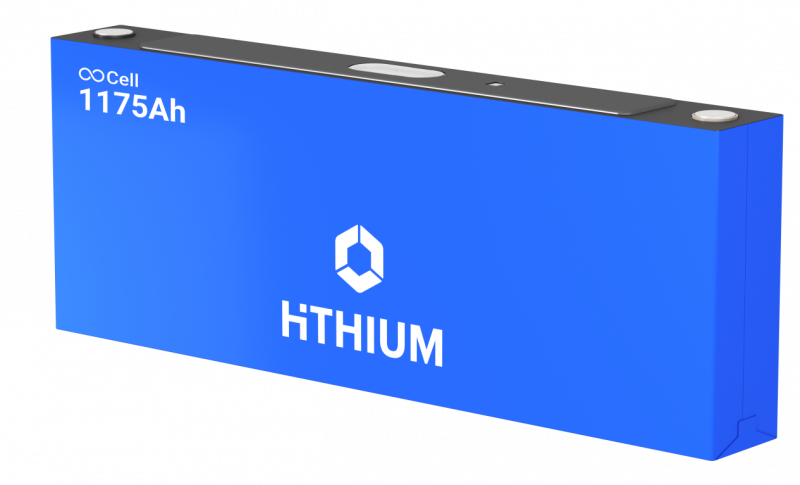
Four-hour energy delivery: A 0.25P charge/discharge rate supports four-hour applications. The cell is used in HiTHIUM's ∞Power 6.25MWh 4h system for sustained energy transfer.
Capacity and compact integration: The 1175Ah capacity can reduce cell count compared with smaller-capacity cells at comparable nominal voltage and total energy. Energy densities of ≥180 Wh/kg and ≥400 Wh/L support compact integration.
Repeated cycling: A published rating of ≥11,000 nominal cycles provides a basis for assessing suitability for regular charging and discharging over the project lifecycle.
Low temperature rise: The low-temperature-rise design helps limit heating during sustained operation, supporting thermal management in long-duration storage applications.
Safety and transport testing: The cell is certified to IEC 62619 and UL 1973 and has completed UN 38.3 transport testing. The ∞Power 6.25MWh 4h system has also completed UL 9540A testing.
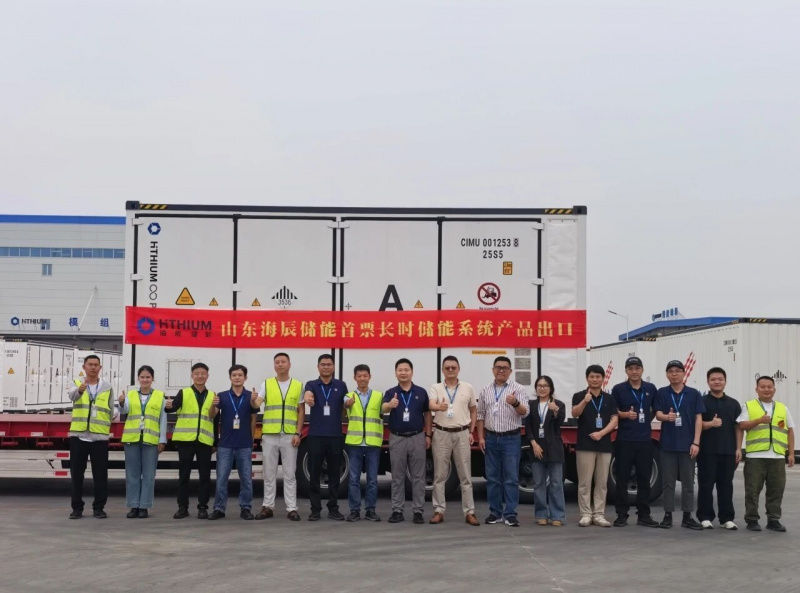
Mass production and overseas delivery: ∞Cell 1175Ah entered mass production at HiTHIUM’s Chongqing base in June 2025, and the ∞Power 6.25MWh 4h system began global deliveries that October. In 2026, the Heze base exported systems using 1175Ah cells for overseas long-duration storage projects.
Selecting LFP battery cells involves matching operating requirements, performance data and system compatibility. The cell’s operating characteristics and documented delivery record make ∞Cell 1175Ah a relevant option for buyers considering both technical suitability and supply readiness. HiTHIUM combines product development with manufacturing and delivery experience to address these requirements.
Discuss your project requirements with HiTHIUM to identify a suitable cell and system configuration.
[1] Sandia National Laboratories. DOE Energy Storage Handbook, Chapter 3: Lithium-Ion Batteries.
https://sandia.gov/ess-ssl/wp-content/uploads/2021/03/ESHB-Ch3_Lithium-Batteries_Preger.pdf
[2] U.S. Department of Energy, Federal Energy Management Program. Battery Energy Storage System Evaluation Method.
https://www.energy.gov/sites/default/files/2024-01/bess-evaluation-method.pdf
[3] UL Solutions. UL 9540A Test Method for Battery Energy Storage Systems (BESS).
https://www.ul.com/services/ul-9540a-test-method