Key Takeaways l HiTHIUM completed the world's first open-door large-scale fire test on an LDES system equipped with kAh-class battery cells, conducted under the supervision of UL Solutions and fire protection engineers in compliance with the latest UL 9540A 2025 and NFPA 855-2026 standards. l No explosion.The three-dimensional airflow channel and directional dual-valve design enabled controlled gas release at both cell and module levels, with no explosive pressure buildup or debris ejection observed. l No propagation. Under open-door combustion with minimal spacing, fire was confined to a single battery system. Temperatures in adjacent containers remained below safety thresholds throughout the test. l No structural failure.The high-strength steel frame, stiffeners, and dual-layer partitions maintained full structural integrity after prolonged combustion, with no significant deformation or collapse. |
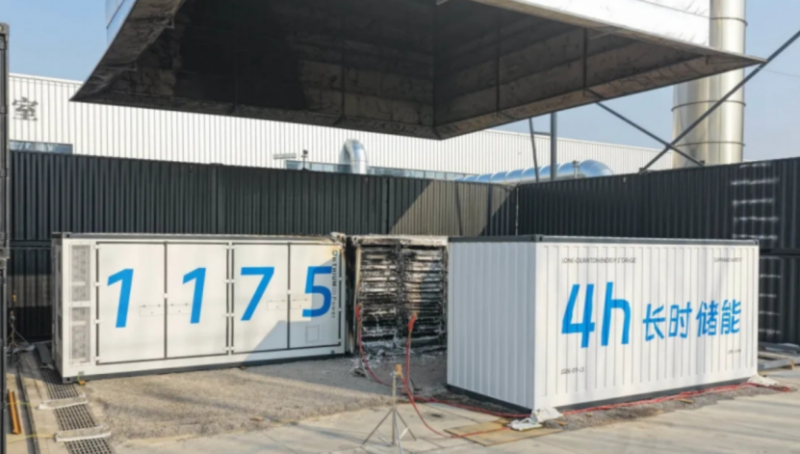
HiTHIUM has successfully completed the world’s first open-door fire test on a 6.25MWh long-duration energy storage (LDES) system equipped with kiloampere-hour (kAh) battery cells. This milestone demonstration provides evidence that large-scale battery energy storage systems can move more safely from pilot projects to scalable, replicable deployment.
By addressing critical safety uncertainties, this test lays a solid foundation for the global rollout of reliable, high-performance LDES systems.
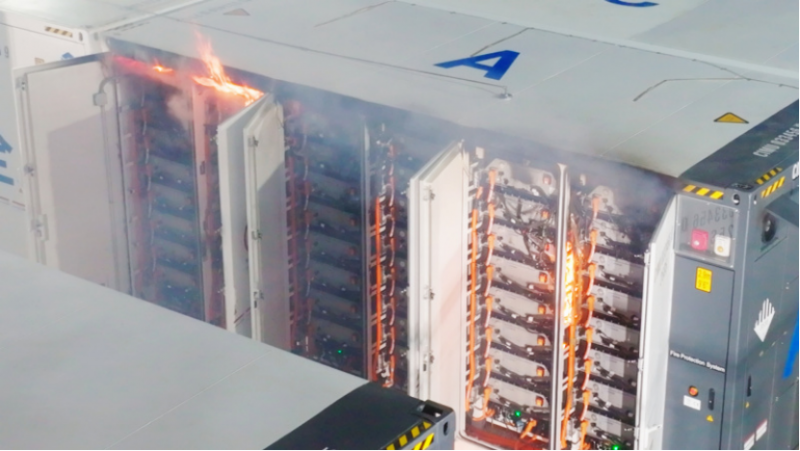
HiTHIUM’s fire test was designed to simulate the most extreme conditions possible.
In the “open-door combustion” setup, the container doors were fully open throughout the test, with no containment to prevent the spread of heat and fire. Additionally, the cells were spaced only 15 cm apart, creating an environment designed to challenge the system’s thermal management and safety mechanisms.
By subjecting the LDES system to these extreme conditions, HiTHIUM effectively tested the passive safety capabilities of the system, ensuring that large-scale battery energy storage systems could withstand potential hazards without external intervention.
This open-door combustion scenario is one of the most demanding tests for energy storage systems, pushing the limits of their ability to contain heat and fire. By successfully passing this test, HiTHIUM has shown that its LDES system can maintain stable and controllable safety performance under extreme test conditions.
In a standard fire test, fire suppression systems are often used to mitigate risk. However, HiTHIUM chose to disable all active fire suppression systems during this test, leaving the system dependent on its built-in safety mechanisms.
Moreover, the system was tested at 100% State of Charge (SOC), meaning it was operating at its maximum energy capacity. This approach was intentional, allowing HiTHIUM to verify the system’s “baseline safety” in its most extreme state, ensuring that it could function safely without any external interventions.
This test is a testament to the effectiveness of HiTHIUM’s design, which integrates advanced safety mechanisms that can handle high-energy-density conditions. By conducting the test under these extreme conditions, HiTHIUM demonstrated the system’s resilience and its ability to mitigate risks of catastrophic failure, even without relying on supplementary safety measures.
The test involved HiTHIUM’s 1175Ah ultra-large-capacity battery cells, which are at the core of its long-duration energy storage systems. These high-energy-density cells store large amounts of energy and are capable of powering grid-scale systems for extended periods.
The critical challenge lies in managing the immense energy release during a thermal runaway event, a failure scenario that could lead to overheating or fire if not properly controlled. Successfully mitigating this risk is essential to ensuring the safe deployment of high-capacity LDES systems.
In this regard, the success of this test represents an important milestone in battery technology, as it suggests that long-duration energy storage systems can safely manage the immense energy stored within large‑capacity cells under carefully controlled test conditions.
The test was conducted under the direct supervision of UL Solutions and independent fire protection engineers, in full compliance with UL 9540A (2025 edition) and NFPA 855 (2026 edition) — the most current versions of both standards. This makes HiTHIUM among the first energy storage manufacturers to validate system-level safety against these updated requirements, which introduce more stringent evaluation criteria for thermal runaway propagation, fire containment, and gas emissions in large-format battery installations.
As UL 9540A Edition 6 is now recognized as a market access benchmark by regulators in the U.S., Europe, Australia, and the Middle East, this test result carries significance beyond safety validation alone — it effectively clears a key regulatory hurdle for the ∞Power 6.25MWh system in some of the world's most demanding energy storage markets.
At the certification ceremony, Chen Chi, Senior Product Manager for Energy & Automation at UL Solutions Asia Pacific, noted that HiTHIUM's successful completion of the test demonstrates the reliability of the passive safety design in its long-duration energy storage system, and provides a valuable real-world reference for the continued development of global energy storage safety standards.
One of the key challenges in the deployment of LDES systems has been the fear of potential safety risks, particularly when operating at large scales.
The successful completion of HiTHIUM’s fire test helps ease these concerns by providing experimental evidence that LDES systems can demonstrate controllable safety performance under extreme test conditions. This achievement boosts confidence not only among regulators and investors but also among energy providers who are considering LDES systems as part of their grid infrastructure.
The test also reassures the public that large-scale energy storage technologies are better positioned to meet evolving safety expectations for broader deployment. By partially addressing the “fear of the unknown”, HiTHIUM has taken an important step toward a new era of safe, large-scale energy storage.
HiTHIUM’s intrinsic safety design is a core feature that sets its LDES systems apart from others. Rather than relying on external fire suppression systems, HiTHIUM’s systems are built with safety measures that are intrinsic to the design of the battery cells themselves. These safety mechanisms ensure that the system can contain and manage thermal events, preventing fires and reducing the risk of accidents.
By successfully passing the open-door fire test, HiTHIUM has validated the effectiveness of this intrinsic safety approach. This not only enhances the system’s overall safety but also lowers operational risks over the entire lifecycle of the plant, making LDES systems more attractive for large-scale deployments.
The use of ultra-large-capacity cells, such as HiTHIUM’s 1175Ah battery, is crucial to the future of energy storage. These high-energy-density batteries allow for greater storage capacity in a smaller footprint, improving plant economics and maximizing land-use efficiency.
By proving that such high-density systems can operate safely, HiTHIUM has paved the way for next-generation LDES technologies that meet growing energy storage demand, delivering both cost-effectiveness and the scalability needed to support large-scale renewable energy projects.
HiTHIUM’s achievement goes beyond simply meeting existing safety regulations; the extreme-condition test results provide a useful reference for large-scale, high-energy-density LDES safety validation and may serve as an emerging benchmark for the industry.
l Impact on Safety Standards: This test provides a practical reference case for the next generation of battery energy storage system safety standards. Regulatory bodies worldwide, including European certification agencies and China’s energy storage standards committees, can use similar open-door fire tests as part of their evaluation protocols for high-capacity LDES systems.
l Market Confidence: Beyond regulatory implications, the verified safety performance gives investors and energy operators concrete, data-backed evidence of reliability, reducing perceived risks and supporting wider adoption of large-scale LDES deployments.
By addressing concerns over safety and operational uncertainty, HiTHIUM advances the industry from basic compliance toward proactive leadership, setting a precedent for future high-energy-density storage systems.
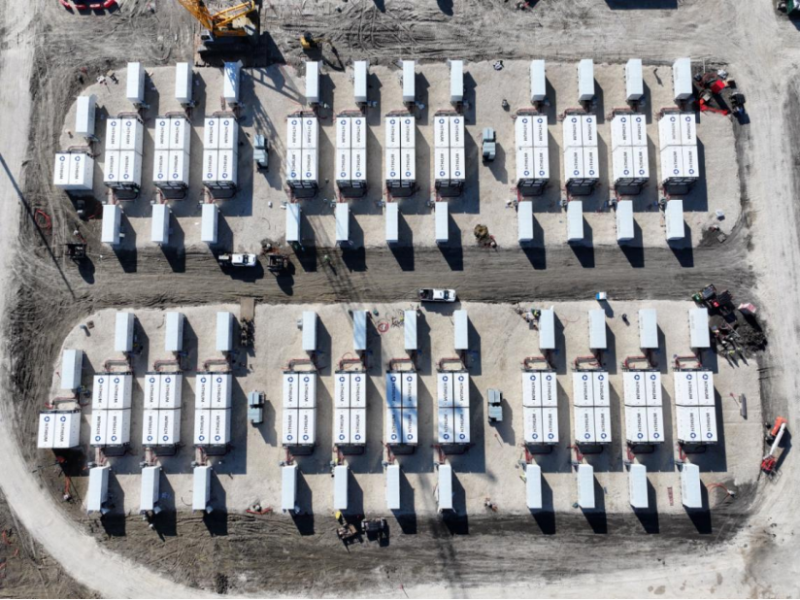
In addition, this achievement paves the way for larger-scale, longer-duration storage applications.
l High Energy Density Feasibility: The 1175Ah ultra-large-capacity cells in the 6.25MWh system demonstrated safe operation under extreme conditions, validating the technical feasibility of high-energy-density long-duration storage.
l Land and Economic Efficiency: With higher energy density, storage facilities require less land for equivalent capacity, reducing construction and operational costs while maximizing energy output per unit area.
l Support for Diverse Use Cases: These systems can reliably provide peak shaving, frequency regulation, and integration of renewable energy. In regions with high solar and wind penetration, or in microgrids and islanded power systems, they enable flexible “night discharge/daytime charge” strategies while maintaining grid stability.
These results provide supporting evidence that high-energy-density long-duration storage can be safely deployed at the grid scale. The combination of technical feasibility, energy density, and system reliability ensures that large-scale plants can operate efficiently, maximize land use, and support practical grid services such as peak shaving, frequency regulation, and renewable energy integration. This suggests that LDES systems are increasingly approaching readiness for real-world, large-scale deployment.
In summary, HiTHIUM’s successful fire test not only highlights its technical leadership but also sets a tangible benchmark for the entire LDES industry. By advancing safety standards, enabling larger-scale applications, and fostering collaboration, this achievement helps strengthen the technical foundation for scalable, reliable, and high-performance long-duration energy storage systems worldwide.
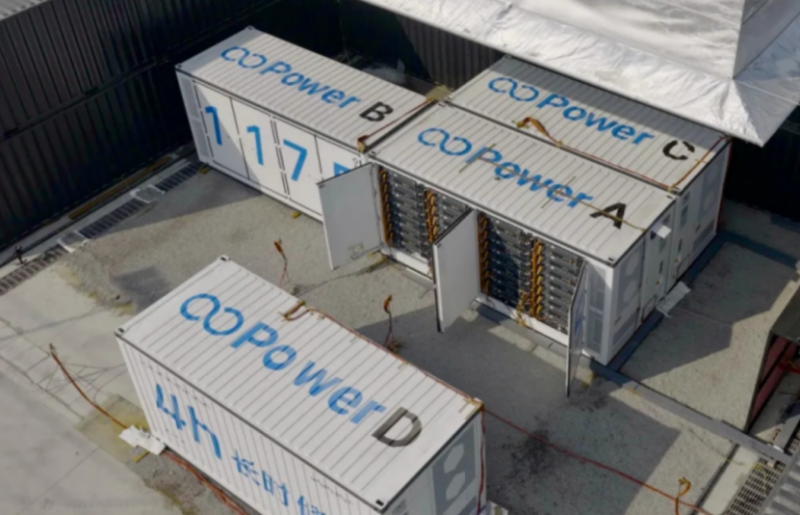
HiTHIUM, a leading China LDES battery manufacturer, has successfully completed the 6.25 MWh open-door fire test, setting a new benchmark for battery energy storage system safety and demonstrating the technical feasibility of high-energy-density LDES at the grid scale.
By demonstrating intrinsic safety, operational reliability, and large-scale feasibility, this achievement builds investor and regulatory confidence, enabling the adoption of cost-effective, scalable, and efficient long-duration energy storage systems, while supporting broader integration of renewable energy and future energy infrastructure development.




 Previous: