For any energy storage installation, the surrounding environment plays a decisive role in determining how many years of reliable service the equipment will ultimately deliver. We at HiTHIUM recognize that temperature fluctuations represent one of the most significant factors influencing degradation rates and capacity retention over time. The conversation around BESS battery energy storage system longevity must therefore address how thermal management strategies protect internal components from conditions that accelerate wear. When evaluating battery storage systems for real-world applications, understanding the relationship between ambient conditions and cycle life becomes essential for projecting return on investment and planning maintenance schedules accordingly.
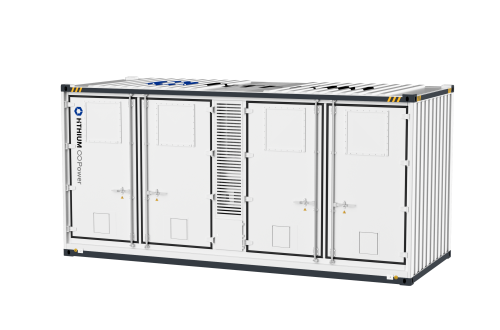
The internal chemistry of lithium batteries responds dynamically to temperature variations, with excessive heat accelerating unwanted side reactions while extreme cold impedes ion movement and reduces usable capacity. Our NEW∞Power 6.9MWh 8h configuration employs liquid cooling technology that actively maintains optimal operating temperatures regardless of external conditions. This sophisticated thermal management ensures that every cell within the BESS battery energy storage system experiences consistent temperatures that minimize stress and preserve electrochemical integrity. By preventing hotspots and maintaining uniform thermal distribution, liquid cooling extends the useful life of battery storage systems far beyond what passive thermal management could achieve. The result is equipment that continues delivering rated capacity through thousands of cycles despite operating in climates with significant seasonal temperature swings.
Effective temperature management requires continuous awareness of conditions both within the battery enclosure and in the surrounding atmosphere. The NEW∞Power series incorporates comprehensive BMS communication capabilities supporting CAN, RS485, and Ethernet protocols, enabling real-time monitoring and adaptive responses to changing thermal conditions. This intelligent oversight allows the BESS battery energy storage system to adjust operational parameters when ambient temperatures approach boundaries that might compromise safety or longevity. For facilities managers overseeing multiple battery storage systems, this communication infrastructure provides valuable data about how environmental factors influence performance across different installation locations. Such visibility enables proactive adjustments that preserve cycle life rather than reacting after degradation has already occurred.
Achieving high energy density while maintaining thermal stability requires sophisticated engineering at both cell and system levels. The NEW∞Power achieves gravimetric energy density of at least 135 Wh/kg and volumetric energy density of at least 160 Wh/L through advanced materials and efficient packaging that minimizes internal resistance and heat generation. These density figures mean the BESS battery energy storage system delivers substantial capacity within a compact footprint while generating less waste heat during charge and discharge cycles. Reduced internal heat production lessens the burden on cooling systems, allowing battery storage systems to maintain optimal temperatures even during high-intensity operation periods. This virtuous cycle of efficiency and thermal management ensures that cycle life remains uncompromised by the very density that makes modern storage economically viable.
Temperature considerations extend beyond performance optimization to encompass fundamental safety requirements that vary with installation environment. The NEW∞Power incorporates multi-stage active fire detection and protection systems compliant with NFPA 855 standards, providing multiple layers of defense against thermal events regardless of ambient conditions. Furthermore, this equipment supports back-to-back and side-by-side installations with application altitudes reaching 4,000 meters, demonstrating robust design that maintains safety margins across diverse geographical settings. For any BESS battery energy storage system, such comprehensive protection ensures that temperature-related risks remain controlled even when installations must accommodate space constraints or high-elevation locations. The integration of low-noise operation with new eco-friendly refrigerants further demonstrates how environmental responsibility and thermal management work together in modern battery storage systems.
The relationship between ambient conditions and battery longevity demands sophisticated engineering solutions that maintain ideal operating environments across decades of service. Through advanced liquid cooling maintaining consistent cell temperatures, comprehensive BMS communication enabling adaptive responses, high energy density designs minimizing internal heat generation, and multi-stage protection ensuring safety across diverse installations, we deliver HiTHIUM BESS that preserves cycle life regardless of external conditions. This thermal management philosophy ensures that battery storage systems continue delivering reliable performance through years of temperature fluctuations, protecting the investment that makes energy independence achievable for facilities worldwide.




 Previous: